KW Default Solutions
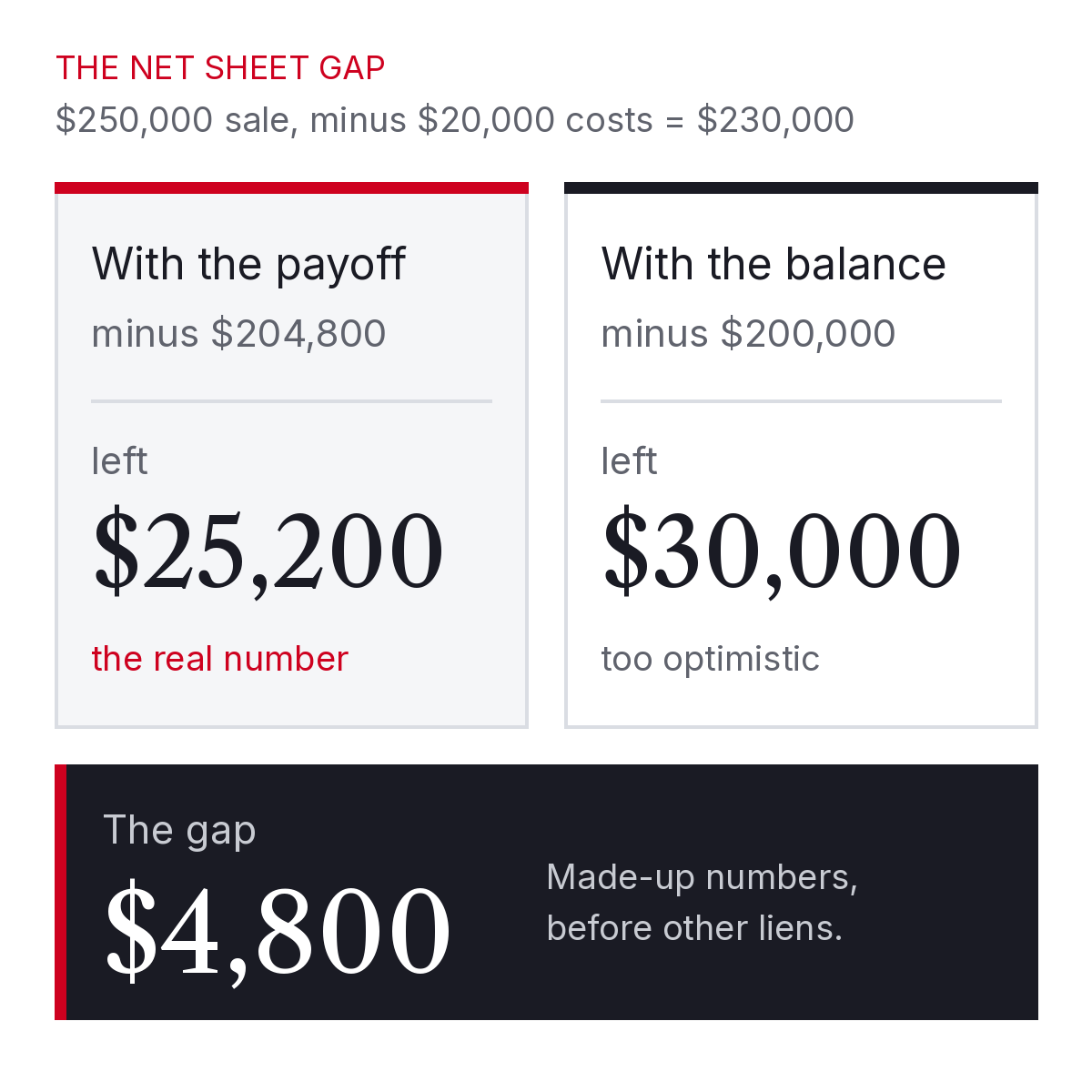
Here is how wrong, using made-up numbers. The statement shows a $200,000 principal balance. The house might sell for $250,000, and you estimate $20,000 in selling costs. Use the balance, and it looks like the seller walks away with $30,000, before any other liens. But the payoff is $204,800, so the real number is $25,200, also before other liens. Your net sheet was $4,800 too optimistic.
That's the mistake this article helps you avoid. "How much do I owe?" has four answers. The two that matter most are the reinstatement amount and the payoff.
| NumberThe question it answers | Use it when |
|---|---|
| Principal balanceHow much of the loan is unpaid? | › You need background |
| Past-due amountWhat does the statement show as overdue? | › You're spotting the problem |
| Reinstatement amountWhat does it take to catch up and keep the loan? | › The homeowner wants to keep the house |
| Payoff amountWhat does it take to pay off the whole loan on a set date? | › A sale is on the table |
The servicer and the closing team confirm the real figures. The numbers here only show the difference.
Start with one question
Ask: "Are you trying to bring the loan current, or pay it off?"
Catching up and paying off are different jobs. One keeps the homeowner in the house. The other ends the loan, usually through a sale. Their answer tells you which number you need. It can change mid-conversation, and asking about a sale doesn't mean they've decided to sell.
The payoff is the number for a sale
The payoff is what it takes to pay off the entire loan as of a certain date. It usually includes the unpaid principal and the interest through that day. It may also include fees that haven't been paid yet. Interest is usually counted each day through the payoff date. This daily interest is often called per diem, so the number changes with the date. That's why it's usually bigger than the balance. [1]
When the homeowner sends a written request to the servicer, the servicer generally has to give an accurate payoff statement of the total as of a specific date. A payoff quote is good through the good-through date on the quote. If closing moves, ask for a new one.
Reinstatement is the number for keeping the house
A reinstatement amount is what it takes to bring a past-due loan current. The loan continues, and so do the monthly payments. It does not pay off the mortgage.
Whether a homeowner can reinstate, and by when, depends on the loan and applicable law. Check your state's rules. Fannie Mae, for example, tells its servicers to consider reinstatement when a borrower is behind and can bring the loan current. That's a Fannie Mae rule for Fannie Mae loans, not every mortgage. [2] Don't quote a cutoff date. Send the homeowner to the servicer for the real figure.
Balance and past due are just context
The balance is a starting point, not the payoff. The past-due amount is what the statement says is overdue. Multiplying the monthly payment by the months missed can leave out fees and partial payments, so don't use it as a reinstatement figure.
One loan, side by side
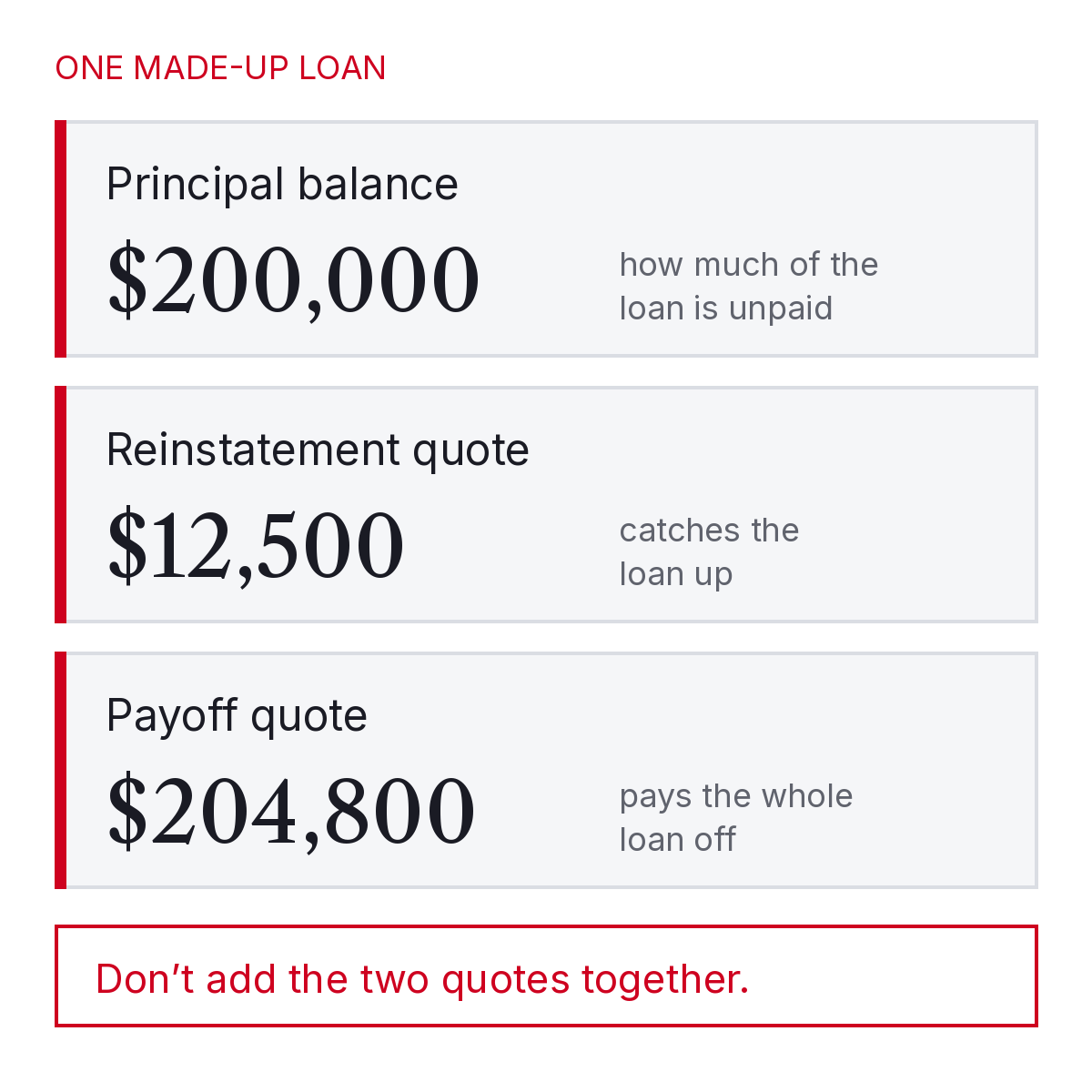
The fictional loan has a $200,000 principal balance, a $12,500 reinstatement quote and a $204,800 payoff quote.
The $12,500 brings the loan current, but it doesn't pay the loan off. How a payment changes the $200,000 principal depends on how the servicer applies it. The $204,800 pays the whole loan off. It isn't an extra amount on top of the balance.
Don't add the two quotes together. Part of the reinstatement amount may already be inside the payoff, and you'd count it twice.
Put the payoff in your net sheet
Here is the sale math with the payoff:
- $250,000 sale price
- minus $20,000 selling costs, which leaves $230,000
- minus $204,800 payoff, which leaves $25,200
Now the same math with the balance:
- $230,000 minus $200,000 leaves $30,000
That's $4,800 more than the real number. On a real file, use current estimates for costs and add any other liens.
Before you use a number
Get the figure from the servicer instead of estimating it yourself. Then write down these five things:
- The goal: catch up or pay off.
- The exact figure: payoff, reinstatement or something else.
- The account it covers.
- The date it was issued and the date it's good through.
- Who sent it and who will update it if closing moves.
If the payoff looks wrong, don't change it to match your worksheet. Ask the servicer and the closing team to explain the difference. And if an email changes where the money should go, call a number you already trust before you act on it.
Asking for a quote or listing the house doesn't, by itself, pause a foreclosure. If there's a sale date, confirm its status separately. And don't collect or handle a homeowner's catch-up money yourself. Payments go through the servicer or the closing team.
Why this matters to you
The payoff drives the seller's net sheet and whether the deal is heading toward a short sale. It doesn't set the listing price, but build the net sheet on the wrong number and you'll be resetting the seller's expectations later. Next time a homeowner asks what they owe, ask whether they want to bring the loan current or pay it off, and get the dated figure for that goal. If the payoff is more than the sale would net after costs, that may be a short sale conversation.
Questions? Ask our team through the KWDS contact form.