KW Default Solutions
Before you build a plan around that, find out who they talked to and what that person said. "The bank" can mean a servicer, a lender, a loan owner or a law firm. They each do a different job, and the right question sent to the wrong office can stall the file.
Start with this table.
| Name you hearWhat they do | What to ask |
|---|---|
| LenderMade the loan | › Do you still handle this account? |
| ServicerCollects payments and runs the account | › Which department reviews short sales? |
| Loan owner (investor)Owns the loan and usually sets the rules | › Whose requirements apply here? |
| Insurer or guarantorBacks the loan (FHA, VA or private mortgage insurance) | › Does this loan have its own review rules? |
| BorrowerOwes the loan | › Who has to sign the authorization? |
| Property ownerOwns the house | › Who has to sign the listing and sale papers? |
| Foreclosure attorney or trusteeHandles the foreclosure process | › What is the sale status? |
| Title or closing professionalChecks title and handles the closing | › What payoffs and liens need attention? |
A fictional file to follow
This file is made up. The homeowner's current statement lists Servicer A. The closing papers from years ago list Lender B. This week a letter arrived from a foreclosure attorney. The homeowner says, "The bank said I could sell."
Here is who you ask about what:
- Servicer A: The homeowner pays this company, so its short sale or loss mitigation department is usually where a sale review starts.
- Lender B: Old closing papers usually show who made the loan, not who handles it now. You probably have nothing to ask them.
- The loan owner: You don't know yet. You'll find out below.
- The foreclosure attorney: Ask about the sale status. A short sale review and a foreclosure can run at the same time, so don't assume one stops the other.
Servicer vs. loan owner
The servicer sends statements, takes payments and answers account questions. If there is an escrow account for taxes and insurance, it manages that too. The current statement usually tells you who the servicer is. [1]
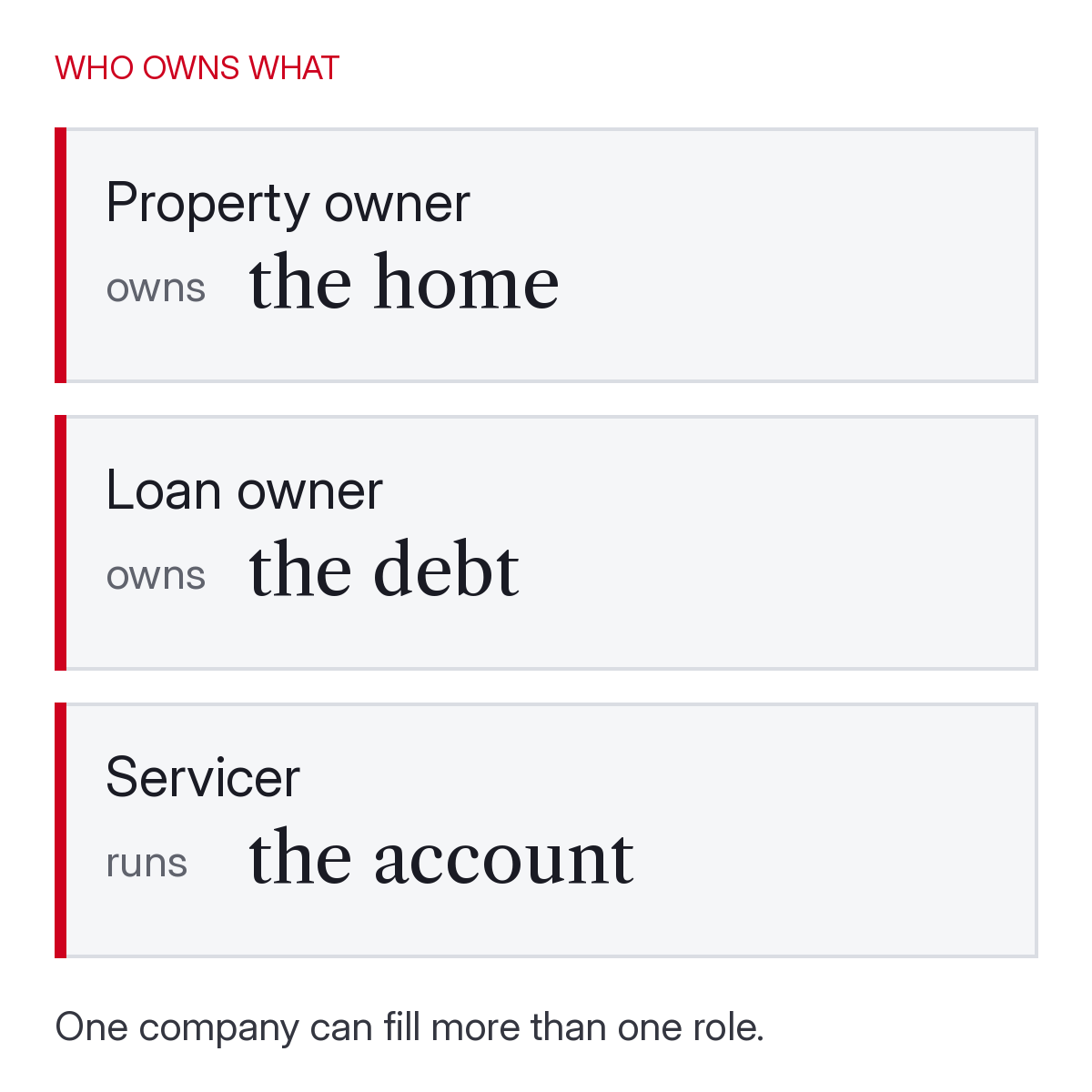
The loan owner is the company that owns the debt. Many loans are sold, so the servicer the homeowner pays may not be the owner. [2] The servicer usually works under the owner's rules. Fannie Mae, for example, publishes short sale rules for its loans. Those rules cover Fannie Mae loans, not every mortgage. [3]
Owning the loan is not the same as owning the house.
How to find the loan owner
There are three ways:
- Ask the servicer. When the borrower asks, the servicer has to give the name, address and phone number of the loan owner, to the best of its knowledge. [2] Under Regulation X, the borrower makes the request in writing and the servicer generally has 10 business days to answer. [4]
- Use Fannie Mae's lookup tool.[5]
- Use Freddie Mac's lookup tool.[6]
The homeowner should enter their own details in the lookup tools. A no-match result doesn't prove that company doesn't own the loan. It can come from incomplete or mismatched information, so check the entries and confirm ownership with the servicer.
In our fictional file, the homeowner runs Fannie Mae's tool, and it says Fannie Mae owns the loan. Now you know what to ask Servicer A: which Fannie Mae short sale requirements apply?
Loss mitigation vs. foreclosure
Loss mitigation is the servicer's work to help a borrower avoid foreclosure or reduce the loss. A short sale is one option, but not the only one. [7]
Foreclosure is the legal process to collect the debt through the house. An attorney or trustee usually handles it, and the exact role depends on the state. These are separate offices with separate jobs. When a letter shows a sale date, write down which document it came from and confirm the status with the attorney.
This is education, not legal advice. Send questions about rights or deadlines to an attorney.
Borrower vs. property owner
Someone can be on the title without being on the loan, or on the loan without being on the title. It gets more complicated with co-owners, a death, a divorce, a trust or a business. The statement usually won't tell you who can sign. Ask a title or closing professional to check, and bring in an attorney if it's disputed.
Your first call
Call the servicer after your authorization is in. Ask the loan owner question with the homeowner on the line, or use the lookup tools. Here's a script:
What to write down after the call
Record the date, the company, the department, the person's name or a reference number, and what you asked. Then split what you heard into two lists: instructions and decisions.
Here is a note for our fictional file:
A weak note says, "Bank approved short sale." If someone says "approved," ask what was approved: permission to submit, a review, a price or the final deal?
Your listing agreement generally does not give you permission to get loan details. The homeowner usually signs an authorization for each servicer, and you confirm it was accepted. Keep account numbers and ID in your secure file.
Build the contact sheet
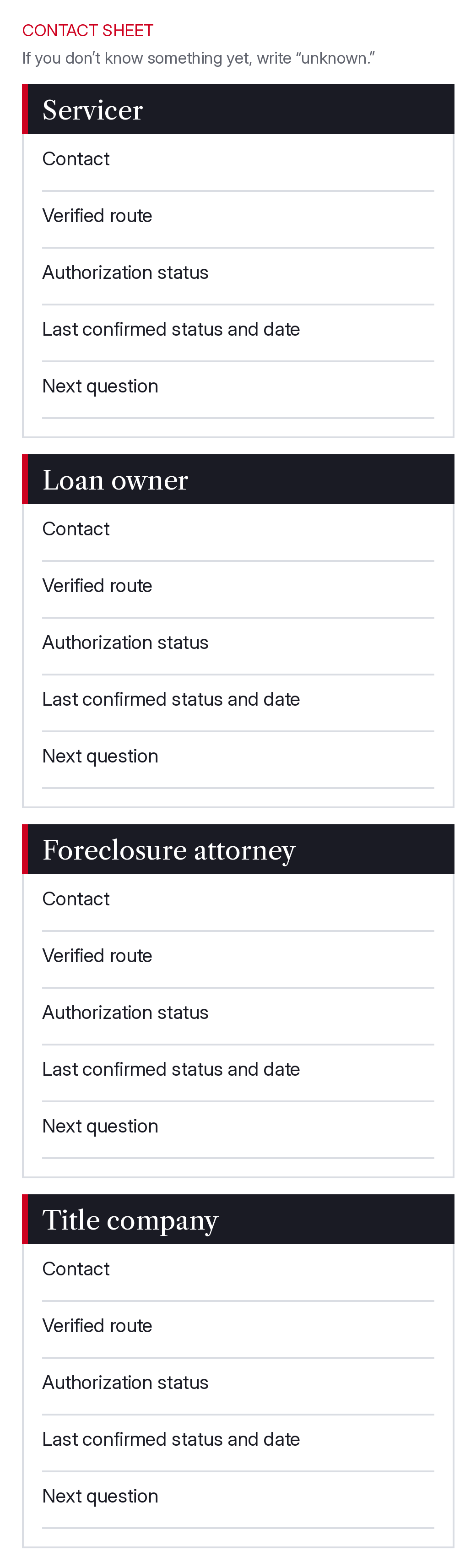
Before your next call, build a contact sheet in your secure file. Give each of these a row: the servicer, the loan owner, the foreclosure attorney and the title company. For each one, write the person or department, a phone number or portal you verified, what they handle, your authorization status, the last confirmed status with its date, and your next question. If you don't know something yet, write "unknown."
Questions? Ask our team through the KWDS contact form.